Powering the next generation of transaction banking

Societe Generale helps corporates navigate a rapidly changing payments ecosystem by bringing together traditional finance and digital assets
The article was first published on The Asset.
As the payments landscape becomes increasingly fragmented, global corporate treasurers and financial institutions are seeking trusted partners that can simplify liquidity, data, and transaction flows.
Traditional payment systems are developing faster than ever, demanding optimized cash management infrastructure. At the same time, the future of financial services is shifting towards blockchain technology. To bridge this divide, Societe Generale is leveraging its dedicated digital asset subsidiary, Societe Generale-FORGE, as a high-velocity innovation layer supporting the Bank. By embedding regulated stablecoins directly into the transactional core, the Bank is racing to institutionalize digital flows within a safe, bank-grade architecture.
Navigating the APAC landscape
Despite global economic uncertainties, transaction banking in Asia-Pacific is evolving at a record pace. Corporate treasurers, facing diverse payment schemes across multiple jurisdictions, require a strategic partner to manage systemic friction rather than simply process payments.
This operational reality has transformed the regional strategy for global financial institutions. Societe Generale’s approach in APAC focuses heavily on converting traditional transaction banking into a holistic treasury and working-capital partnership.
“In APAC, increasing fragmentation across payment schemes, regulations, currencies and digital ecosystems requires clients to manage complexity rather than simply process transactions,” says Soo Tat Kua, Head of Global Transaction and Payment Services, Asia-Pacific, at Societe Generale. “Our strategy is therefore built around three pillars: connectivity, liquidity and data. We are strengthening access to domestic and cross-border payment infrastructures, helping clients centralize and optimize liquidity across multiple markets, and providing richer data and analytics to improve treasury decision-making.”
Reimagining cash management
Beyond standard connectivity, this corporate migration towards unified platforms is heavily driven by next-generation cash management and cross-border payment architectures. In today’s corporate landscape, traditional cross-border payments frequently suffer from friction, including restricted operating hours, processing delays, and manual reconciliation bottlenecks.
To address these inefficiencies, Societe Generale integrates technology directly into its cash management capabilities. This includes deploying corporate APIs (application programming interfaces) for real-time ERP (enterprise resource planning) integration, utilizing artificial intelligence (AI) for risk management and embedding automation to eliminate manual intervention in payment processing.
"Societe Generale differentiates itself through the combination of global expertise, strong local execution and a client-centric advisory approach. Rather than offering a one-size-fits-all solution, we focus on solving specific treasury, liquidity and working-capital challenges for our clients. Our ability to combine cash management, trade finance, supply chain finance, foreign exchange and capital markets capabilities allows us to create integrated solutions," Kua explains.
The digital asset strategy
While traditional transaction infrastructures are being optimized via automation, the true structural pivot is occurring in the digital money space. Societe Generale’s strategy is built around the issuance and integration of regulated stablecoins and digital assets to solve persistent friction in capital mobility.
This acceleration is supported by evolving international frameworks, notably the Markets in Crypto-Assets (MiCA) regulation in Europe, which provides the necessary legal certainty for institutional adoption. Consequently, global digital asset markets now exceed US$2.5 trillion, with stablecoins representing more than US$300 billion historically.
"Societe Generale FORGE plays a key role in supporting the Bank’s broader transaction banking by enabling the transition towards new forms of digital payments and settlement,” says Gildas Le Treut, Managing Director and Chief Business Officer at Societe Generale-FORGE. “As the Group’s dedicated subsidiary for digital assets, it develops regulated, blockchain-based solutions that complement existing banking infrastructures and extend their capabilities. By issuing and integrating MiCA compliant stablecoins such as EUR CoinVertible and USD CoinVertible, Societe Generale FORGE provides programmable, always-available settlement instruments that can operate across both traditional and digital environments."
Integrating tokenized assets
The operational integration of these tokenized assets into transaction banking addresses a critical structural gap. When financial institutions execute tokenization transactions for financial instruments – such as bonds or repos – the process requires a corresponding digital cash leg to function efficiently.
Settling an on-chain asset using traditional off-chain banking rails introduces settlement lag, counterparty risk, and manual intervention, negating the primary advantages of distributed ledgers. By operating as programmable cash instruments, stablecoins enable real-time, 24/7/365 settlement, improve liquidity mobility across entities, and allow corporate treasurers to bypass traditional banking cut-off times.
"When Societe Generale-FORGE executed its first tokenization transactions several years ago, it became clear that tokenizing a security also requires the cash leg. Without a reliable form of digital money, true delivery versus payment settlement onchain is not possible. That realization was the foundation for the EUR CoinVertible and USD CoinVertible stablecoins, launched in 2023 and 2025, respectively. Regulated stablecoins such as EUR and USD CoinVertible act as a bridge by combining the strengths of traditional finance with blockchain capabilities," Le Treut highlights.
Unlike other forms of digital money, bank-backed MiCA-regulated stablecoins stand out through a strict regulatory framework, 1:1 backing by high-quality liquid assets, interoperability, programmability, liquidity and broad accessibility. This banking-grade structure gives corporate clients the operational certainty required to embed digital money into real-world treasury workflows.
Expanding the legal architecture
Recognizing that the future of transaction banking depends on the seamless coexistence of traditional and digital ecosystems, Societe Generale is building capabilities that allow clients to navigate both environments without friction. Future leadership in transaction banking will belong to institutions that can combine core payment infrastructure with emerging digital asset networks.
"The future payment ecosystem is likely to be characterized by increasing convergence between traditional fiat systems, regulated stablecoins, and tokenized forms of money such as tokenized deposits or central bank digital currencies. Rather than replacing existing systems, stablecoins are expected to complement them by providing new, more efficient settlement layers operating on blockchain infrastructure," Le Treut says.
Ultimately, the convergence of traditional and digital financial ecosystems presents a significant opportunity to reshape the future of transaction banking. By combining deep transaction banking expertise, global connectivity and regulated digital asset capabilities, Societe Generale is helping clients navigate the next evolution of payments, liquidity and financial market infrastructure.
"Banks will remain central to the financial system because trust, risk management and regulatory compliance will become even more important in a more complex digital ecosystem,” Kua stresses. “The role of banks will evolve from being solely providers of accounts and payments to becoming orchestrators of interconnected financial networks. They will provide secure access to liquidity, identity, compliance frameworks, risk management and settlement services across both traditional and digital environments."
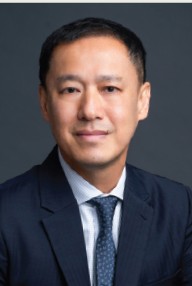
Soo Tat Kua “We are strengthening access to domestic and cross-border payment infrastructures, helping clients centralize and optimize liquidity across multiple markets, and providing richer data and analytics to improve treasury decision-making” |
Gildas Le Treut "The future payment ecosystem is likely to be characterized by increasing convergence between traditional fiat systems, regulated stablecoins, and tokenized forms of money such as tokenized deposits or central bank digital currencies” |

ソシエテ・ジェネラル、伊藤 潤を日本における投資銀行本部 資本市場部長に任命
ソシエテ・ジェネラルは、伊藤 潤(Jun Ito)を日本における投資銀行本部 資本市場部長に任命したことをお知らせします。

ソシエテ・ジェネラル、マーク・サフォンを日本におけるグループ・カントリー・ヘッドに任命
ソシエテ・ジェネラルは本日、2026年9月1日付でマーク・サフォン(Marc Saffon)を日本におけるグループ・カントリー・ヘッドに任命することを発表しました。

Societe Generale helps corporates navigate a rapidly changing payments ecosystem by bringing together traditional...

By Puneet Singh, Head of Cross Asset Quant, Asia Pacific

By Mark Chng, Head of Fixed Income & Currencies Sales, Southeast Asia

By David Jiang, Head of Industry Group, Industrial and Technology, Asia Pacific.

By Wei Yao, Global Chief Economist and Head of APAC Research at Societe Generale