Leveraging Carbon Capture, Utilisation and Storage for Energy Transition

Carbon Capture, Utilisation and Storage (CCUS) is becoming an important solution to manage greenhouse gas (GHG) emissions across a range of large-scale energy and industrial systems. CCUS development at scale is now recognised as a prerequisite for decarbonisation and essential to meeting net-zero targets within the timescales set by governments in major developed economies.
By Allan Baker, Managing Director, Global Head of Power, and Ben Arnott, Managing Director, Head of Energy Finance and Advisory, South East Asia
The potential of CCUS in Asia
While it is regarded as a high-potential and scalable industry, CCUS has yet to make inroads in Asia, except for China. There is urgency to make rapid progress with the need for economies in the region to decarbonise and make good on their commitments to the Paris Agreement.
With a backdrop of rapid industrial development and increasing per-capita energy usage in the region, a transition in the way electricity is produced will not in isolation reduce GHG emissions to the net zero levels required. As countries need to look at removing carbon dioxide from their fuel combustion and industrial processes, CCUS could be a viable solution, as long as key factors concerning government support and regulatory framework are met.
Carbon taxation as a driver
In a drive to develop low-carbon energy and industry, CCUS has already become a key element of energy policies in certain markets of the European Union, in the United Kingdom, the United States and also in China. New carbon taxation and carbon trading schemes have been supporting these long-term CCUS ambitions.
A stringent carbon taxation system is able to drive rapid CCUS development as it effectively recognises there is a cost to emitting carbon. There are wider considerations, however, not least the viability of the underlying businesses that try to reduce or offset their emissions with or without access to sequestration projects. While the universal application and extent of carbon taxation across a large part of the economy is critical, it should be focused on industries, such as CCUS, able to respond to the appropriate incentives for energy conservation. It is equally important to ensure that carbon taxation does not lead to carbon ‘leakage’, with emitters moving from high to lower taxation jurisdictions.
While favourable carbon tax incentives and grants can accelerate the development of the CCUS industry, a number of established CCUS projects have also helped to further define technological and commercial parameters for the sector. These have put carbon capture on the agenda of the world’s largest energy companies. If the current trajectory continues, we could see the first commercially financed projects take off in the US, UK or Norway.
The need for government support
Some aspects of CCUS, such as risk allocation, project economics and fiscal stability, need to develop before the financial sector can commit significantly, making the industry more appealing to businesses and investors. Government grant funding and revenue support mechanism, similar to those implemented for renewable energy, is proving vital: they allow potential partnerships, the development of industrial hub concepts and boosting complementary decarbonisation channels such as clean hydrogen production.
A recurring question is the potential risk of sequestered carbon dioxide leaking. The history of oil and gas operations is backing the very low probability, as carbon dioxide is to be stored in the same reservoirs where hydrocarbons have been trapped for millions of years. From a financier’s perspective, the low-probability but high-impact risk could be partially mitigated by the insurance industry, but in some jurisdictions the role of government may need to be the insurer of last resort - a key discussion point when creating CCUS policy frameworks.
Government have therefore a key role to play in creating a compelling vision for the future of CCUS and building public confidence for the impact of reducing GHG emissions. As well as setting policies, governments are able to provide strong regulatory and incentive mechanisms to implement CCUS projects, facilitating the development of solutions in complementary parts of the CCUS value chain.
A growing momentum
The recent investment made by Singaporean sovereign wealth fund GIC and Japanese trading house Mitsui & Co. Ltd in Storegga Geotechnologies, a leading independent CCUS developer, is showing that CCUS is making its move into the global mainstream. It should become an attractive opportunity for the finance community and investors as a range of businesses seek to decarbonise, stimulating significant investment in how carbon dioxide is captured, sequestered, transported and used.
With the right government support and regulatory frameworks in place, we are confident that CCUS is a high-potential sector in the global economy’s transition to net zero. Societe Generale’s role in supporting businesses is firmly rooted in our focus on, and expertise in, advising on and financing the energy sector’s transition to a better and sustainable future. We are well placed to evaluate opportunities in the CCUS arena as an experienced financial advisor on a number of projects in Europe, the UK and US.

Between Fragmentation and Intelligence: The Global Economy’s Next Regime
By Wei Yao, Global Chief Economist and Head of Research for Asia Pacific, Societe Generale

Powering the next generation of transaction banking
Societe Generale helps corporates navigate a rapidly changing payments ecosystem by bringing together traditional...

Rethinking AI through a capital allocation lens
By Puneet Singh, Head of Cross Asset Quant, Asia Pacific
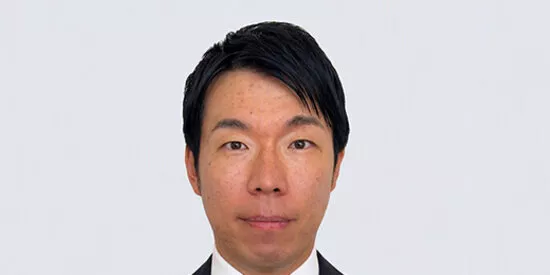
Societe Generale appoints Jun Ito as Head of Debt Capital Markets, Japan
Societe Generale announced the appointment of Jun Ito as Head of Debt Capital Markets, Japan, effective immediately.

Offering a full range of finance and advisory services supported by a strong sectorial expertise.

By Keith Chan, Head of Cross Asset Listed Distribution, Asia Pacific, Societe Generale

Societe Generale is honored to have supported this award‑winning transaction at the Asia Pacific Loan Market Association...

By Rajat Agarwal, Asia Equity Strategist at Societe Generale.

By Tessa Dann, Head of Sustainable Finance, Asia Pacific