
Transition finance is Asia’s opportunity to show leadership
By Tessa Dann, Head of Sustainable Finance, Asia Pacific
At a time of shifts in geopolitics and sentiment, Asia’s energy transition and climate adaptation efforts have remained impressively resilient. Investment continues to flow at scale and policymakers are showing a stable commitment to sustainability while pursuing growth ambitions.
This is translating to a recalibration of Asia’s role in sustainable finance. Having learned from the implementation of sustainable finance regulation and initiatives globally, Asia now has an opportunity to lead. This is particularly true in transition financing, which is both critical for Asia and nascent globally.
We see three key reasons why Asia can lead the way: scale, clarity and commitment.
Scalable opportunities
The first ingredient is scale. Asia Pacific offers significant growth potential in sustainable finance, as many countries step up their efforts to decarbonise.
The Asia Pacific sustainable finance market has remained robust, underscoring the sustained commitment to decarbonisation in the region. Issuance in the most active segments — green loans and green bonds — grew by 20% in 2025.1 Sustainable lending activity overall continues to rise across the region, with Asia Pacific now ranking just behind Europe in terms of the number of transactions.2
When it comes to the broader energy transition, total investments in Asia Pacific grew at a faster pace than in any other region, crossing USD1 trillion in 2024 alone.3 Factors such as advances in transition technologies within Asia and particularly in China, as well as established and adaptive supply chains that can provide equipment at a competitive cost, are driving activity in both new and existing climate solutions, both of which are required at scale to achieve collective decarbonisation goals.
At the same time, urgent efforts are needed to phase out carbon-intensive activities and reduce the region’s reliance on fossil fuels. The IMF estimates the funding gap for climate mitigation and adaptation in Asia stands at USD800 billion a year.4
This makes Asia uniquely placed to attract significant investment to be the engine room that drives the global transition.
A clearer picture emerges
Second, clarity. Regulators and sustainable finance practitioners in Asia are working hard to enhance the standards, set clearer expectations and create the right policy settings for transition financing to gain traction. There is also a healthy level of competition between countries on supporting sustainable finance innovation.
Having avoided the politicisation of decarbonisation objectives experienced this year in other jurisdictions, Asia’s leaders have demonstrated an intention to lean further into climate mitigation and adaptation and link this to their long-term economic strategy, competitiveness and energy security ambitions.
The consistency of decarbonisation-related policy in the Asia Pacific region provides stability and certainty to companies as they make significant, long-term investments.
Developing tools to guide capital and provide clarity is also a key focus of policy makers and the recent progress on sustainable finance taxonomies is particularly notable. Taxonomies clarify green activities, and they can have an impact on capital allocation. A recent study by the Climate Bonds Initiative found that transition loans to the steel sector in Hebei, China surged in 2024 after authorities released a transition financing policy, highlighting the power of clearer guidelines and policy tools in mobilising capital for transition.5
Several taxonomies in Asia now include transition categories, including the next phase of the Hong Kong Sustainable Finance Taxonomy.6 The global loan market associations have also released the Guide to Transition Loans which provides greater clarity on what constitutes a labelled transition loan, maintaining borrower credibility and providing comfort to financiers.7
Progress is also being made to align green definitions, which remains a key challenge as varying definitions and expectations can create uncertainty and hesitancy. More countries may officially join the Multijurisdictional Common Ground Taxonomy (MCGT) initiative, which builds on a China-Europe initiative and aims to unlock substantial capital flows for shared focus areas.8
More clarity on which activities can be considered sustainable will help give lenders and investors confidence, reduce greenwashing risks and highlight genuine transition plans.
Committed to action
The third ingredient – commitment – is also becoming increasingly visible as more corporates recognise the value of their sustainability profile.
One of the best examples is the use of sustainability-linked financing, which provides a powerful incentive for companies to transition by connecting the cost of funding to specific targets. In Asia Pacific, volumes of sustainability-linked loans have remained reasonably strong as more companies strengthen their decarbonisation plans to drive value creation, while also seeking the potential to achieve financial benefits from their sustainability achievements.
Societe Generale has supported the sustainable transition in Asia Pacific for many years. This extends from financing clean power projects to help decarbonise Australian mining9 to complex renewable energy projects in Japan10– among many more. Globally, we have set a target of mobilising EUR500 billion in sustainable finance between 2024 and 2030 and we have also established a EUR1 billion energy transition initiative including EUR700 million in equity dedicated to emerging leaders of the energy transition, nature-based and impact-driven solutions.11 These initiatives not only demonstrate our commitment but also reflect the important actions our clients are taking to decarbonise their operations.
The continued momentum in Asia Pacific gives us confidence that there is more progress, more innovation and more ambition to come. With a mixture of scale, clarity and commitment, this region is uniquely placed to lead the sustainable financing market and channel financing to accelerate the climate transition.
1. Bloomberg (26 December 2025), Green Debt Sales Hit Record Levels Despite Climate Backlash
2. Environmental Finance, Sustainable Loans Insight 2025
3. BloombergNEF (2025), Energy Transition Investment Trends 2025
4. IMF (2024), Unlocking Climate Finance in Asia Pacific: Transitioning to a Sustainable Future
5. Climate Bonds Initiative (2025), Transition finance surges in China’s steel sector after Hebei issues landmark guidelines
6. HKMA (2025), Phase 2 of Hong Kong Taxonomy for Sustainable Finance: advancing the development of green finance
7. APLMA, LMA, LSTA (2025), Guide to Transition Loans: Transition Loans Guide - LSTA
8. ASFI (2025), Charting a Shared Path
9. https://www.societegenerale.asia/en/newsroom/press-releases/press-releases-details/news/supporting-the-decarbonisation-of-australian-mining/
10. https://www.societegenerale.asia/en/newsroom/success-stories/success-stories-details/news/making-japans-first-bess-project-a-reality-1-1/
11. https://www.societegenerale.com/en/responsibility/environment/supporting-transition

Plunge in South Korean stocks saps an astounding market ride for now
By Rajat Agarwal, Asia Equity Strategist at Societe Generale.

Societe Generale adds healthcare to its Asia Pacific Industry Group platform with senior appointment
Societe Generale today announced the addition of the Healthcare sector to its Asia Pacific Industry Group platform,...

Societe Generale appoints Head of Equity Capital Markets for Asia Pacific
As part of its global Investment Banking ambitions, Societe Generale has accelerated the development of its Equity...

Societe Generale named "Americas Bank of the Year" by PFI
Societe Generale has demonstrated its leadership in project and infrastructure finance, earning several recognitions...
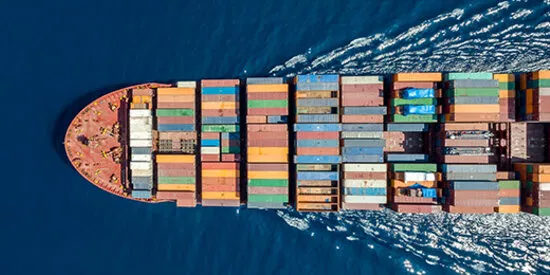
By Pierre Carassus, Head of Maritime Industries, Asia-Pacific at Societe Generale.

By Tessa Dann, Head of Sustainable Finance, Asia Pacific
As we head into 2026, investors face a world of slower global growth, persistent inflation pressures, and evolving...

By Soo Tat Kua, Head of Global Transaction and Payment Services, Asia Pacific, Societe Generale
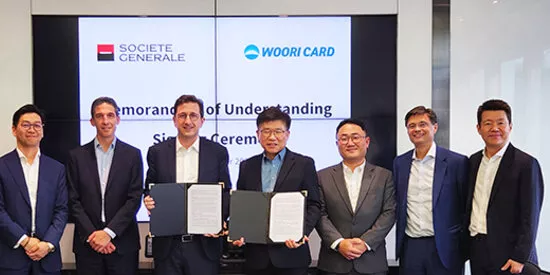
Societe Generale today announced the signing of a Memorandum of Understanding (MOU) with Woori Card, a wholly owned...